excel HR Laser hair removal
Laser hair removal for men and women, on the face and body and on every skin tone, darker and tanned skin included: two wavelengths, 755 and 1064 nm, with sessions from five minutes.
In detail: Laser hair removal for men
Key facts
- Who you’ll see
-
- Dr. Tatiana Pospelova Cosmetology
- Where
- CREAMÉ, 350 Al Wasl Road, Jumeirah 1, Dubai
- Session
- 5–60 minutes, by area
- Numbing
- Optional, for sensitive areas
- Downtime
- None to minimal
- Course
- 6–8 sessions, 4–8 weeks apart
- Device
- excel HR by Cutera, USA Dual-wavelength laser, 755 nm and 1064 nm
excel HR by Cutera, USA
Dual-wavelength laser, 755 nm and 1064 nm
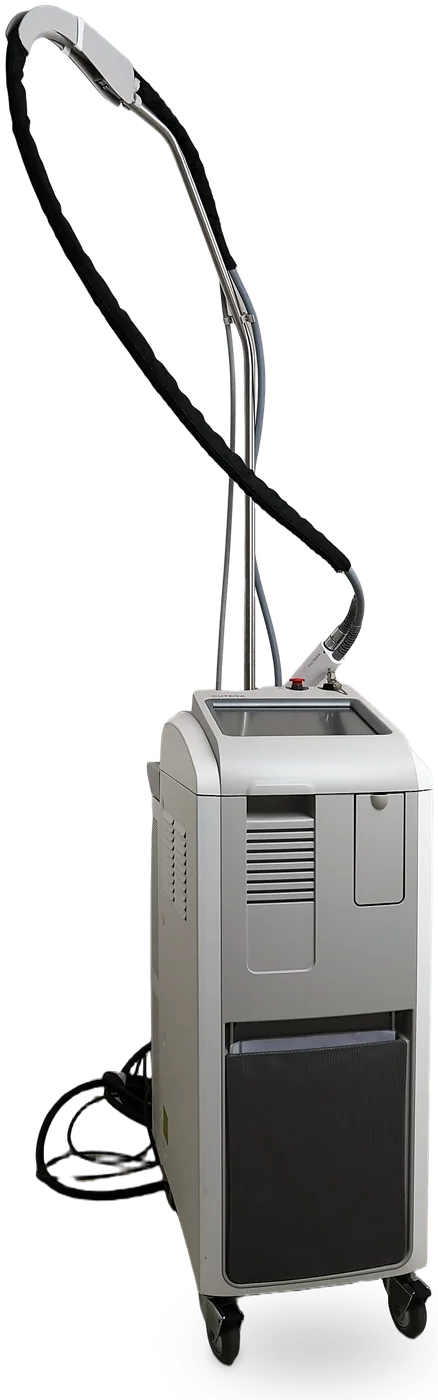
What excel HR is used for
Unwanted hair — the shaving, waxing, ingrown-hair cycle you'd rather retire. On the face or anywhere on the body, on any skin tone.
Who excel HR usually suits
- Dark hair on the face or body that you shave, wax or pluck, and would rather reduce for the long term.
- Any skin tone, from light to dark, tanned skin included, with the wavelength chosen for your skin.
- Men and women: the face, underarms, bikini line, arms, legs, chest, back and shoulders, and the beard line or neck.
- Ingrown hairs and razor bumps on the beard and neck, which the 1064 nm wavelength is also used for, with maintenance.
- Very light, grey, white or red hair responds poorly to any laser: we tell you so at the first visit.
Concerns it may help with
Related treatments
From the Journal
- Laser and light on darker skin tones: what suits, and how dark marks are avoided
- Laser hair removal for men: the beard line, back, chest and full body
- Summer skin care in Dubai: a routine for heat, humidity and air-conditioning
- Aesthetic treatments for men in Dubai: what men ask for, and what is different
- Planning treatments around a flight: before you fly, and after you land
- Before a wedding in Dubai: when to book each treatment
- Laser and the Dubai sun: when to start
How excel HR works
A dual-wavelength medical laser: a 755 nm wavelength suited to finer, lighter hair on lighter skin, and a 1064 nm wavelength that penetrates deeper with far less absorption by skin pigment — which is what makes it suitable for darker and tanned skin. The light is absorbed by the hair's pigment and disables the follicle, while a continuously cooled sapphire window protects the skin.
Laser hair removal areas: full body, face, underarms, bikini line, legs, back and beard line
excel HR treats the face and anywhere on the body, for men and women. Small areas, such as the upper lip or the chin, take 5 to 10 minutes; the underarms or the face 15 to 20; the legs or the back 45 to 60. A full body is planned area by area, often over more than one visit, because the face and the body follow different intervals.
Each area needs a course of six to eight sessions: four to six weeks apart on the face, and six to eight weeks apart on the body, the underarms, bikini line and legs included. Facial hair tends to respond least: in trials that followed people for a full hair-growth cycle, the reduction was smallest on the face, so it may need the full course and more touch-ups.
For men, the back, shoulders, chest, neck and beard line are the usual areas. On the beard, decide on the shape first, because the reduction is long-term. The 1064 nm wavelength is also used for razor bumps on the beard and neck, though they tend to come back without maintenance.
Laser hair removal for dark skin and tanned skin: why the 1064 nm wavelength
A laser finds the hair through its pigment, but darker skin holds more pigment too, so the wrong wavelength can heat the skin instead of the hair. The 1064 nm Nd:YAG wavelength goes deeper and is far less absorbed by skin pigment: its maker indicates it for every skin type, I to VI, tanned skin included, and a 2026 review describes the long-pulsed 1064 nm laser as the standard for hair removal in darker skin.
The risk of darker or lighter patches is still higher on deeper skin tones and after sun, so we set the energy with care, keep the skin cooled through the sapphire window, and plan the sessions around your time in the sun. In Dubai, where skin types IV to VI are common and tans come and go all year, that planning matters as much as the laser.
Alexandrite 755 nm or Nd:YAG 1064 nm: which laser for which skin and hair
excel HR combines two lasers, as its maker describes it: a 755 nm alexandrite laser and a long-pulse 1064 nm Nd:YAG laser, with sapphire contact cooling. The 755 nm wavelength suits finer, lighter hair on lighter skin; the 1064 nm wavelength reaches deeper with far less absorption by skin pigment, for darker and tanned skin.
Which one you have is decided at the first visit, from your skin tone, your hair's colour and thickness and any recent sun, and it can change during a course if your skin tans. Reviews of the evidence find that several kinds of laser, alexandrite and Nd:YAG among them, can reduce hair over the long term; matching the wavelength and settings to your skin is what decides how well it suits you.
No laser works well on white, grey, blonde or red hair, which has too little of the pigment the light targets. We tell you so at the first visit rather than plan a course that won't work.
Is laser hair removal permanent? What long-term reduction means
No laser removes every hair for good. What excel HR's maker means by a lasting result is a long-term, stable reduction in the number of hairs, measured six, nine and twelve months after the last session. In trials that followed people for at least one full hair-growth cycle, hair was reduced by about 30% to 84%, depending on the laser and the area.
Some hairs remain, and hormonal changes can bring new growth over the years, which is why one or two touch-ups a year are usual. Hair that comes back quickly after a full course is worth mentioning to the doctor, since a hormonal cause can be behind it.
A session, step by step
- At the first visit we look at your skin tone, your hair's colour and thickness, any recent sun or tanning, your health and your medicines, then choose the wavelength and settings.
- Shave the area beforehand, but never wax or pluck: the laser needs the root in place. The skin is cleansed and dried, with no make-up or self-tan left on it; numbing cream is optional for sensitive areas.
- Everyone in the room wears eye protection. The cooled sapphire window of the handpiece moves over the skin pulse by pulse, each a warm rubber-band snap: 5 to 10 minutes for small areas, 45 to 60 for legs or a back.
- The skin is cooled again, and sunscreen goes on any exposed skin. Some redness around the follicles is common for a few hours.
What to expect
How it feels
Small areas take 5–10 minutes, underarms or a face 15–20, legs or a back 45–60. Each pulse is a warm rubber-band snap, taken down considerably by the cooling; numbing cream is optional for sensitive areas.
Downtime and recovery
None to minimal — a few hours of mild redness around the follicles. Strict SPF before and after, no waxing or plucking between sessions (shaving is fine), and no saunas or hard workouts for a day or two.
How many sessions, and how often
Hair grows in cycles, so a proper course is 6–8 sessions — spaced 4–6 weeks apart on the face, 6–8 on the body. Treated hairs shed within 1–3 weeks, reduction is visible after 2–3 sessions, and one or two touch-ups a year maintain the result.
excel HR results: what changes, and when
- Straight after Redness and small bumps around the follicles are common and usually fade within hours. Most people carry on with their day; skip saunas and hard workouts for a day or two, and keep the skin out of the sun.
- One to three weeks Treated hairs shed on their own, and until they do it can look as if the hair is growing back. Let them fall rather than pluck them; shaving is fine.
- After two or three sessions A reduction usually becomes visible, as hairs that were resting at the first session come into their growing phase and are treated in turn.
- Six to eight sessions The full course for most areas, four to six weeks apart on the face and six to eight on the body: six months to a year in all. In trials, the reduction was largest on the legs and smallest on the face.
- Every year One or two touch-ups usually keep the result. New growth can follow hormonal changes, so hair that returns quickly is worth showing to a doctor.
Who it may not suit
We go through your health and medicines first, because excel HR may not suit you, or may need to wait, if any of these apply:
- You are pregnant or breastfeeding.
- You are being treated for skin cancer or having chemotherapy, or the area has had radiotherapy.
- The area is tanned, recently in strong sun or self-tanned: we wait for it to fade, or adjust the settings.
- You take a medicine that makes skin sensitive to light, such as some antibiotics, or have taken isotretinoin for acne in the last six months.
- There is an infection, a rash or dermatitis in the area.
- You tend to form keloid or raised scars, or have vitiligo or a tendency to darker or lighter patches of skin.
- You have diabetes or a bleeding disorder, or take blood thinners.
- You get cold sores, or have had shingles, in the area: treatment is still possible, with preventive antiviral medicine first.
- There is a tattoo, permanent make-up or a mole that needs checking in the area: we keep clear of it.
- Your hair is very light, grey or red: laser responds poorly to it.
Risks and side effects of excel HR
Common and short-lived: redness and small bumps around the follicles, usually gone within hours, sometimes swelling, and occasionally bruising, more likely if you take blood thinners.
Less common: darker or lighter patches, more likely on deeper skin tones and after sun or a tan; crusting; and a cold-sore flare in people who get them. Laser can also stimulate more hair growth in or near the area instead of less, which the maker notes is more likely on the face and neck, in women of Mediterranean, Middle Eastern or South Asian heritage; adjusting the settings helps prevent it.
Rare, but important to know: burns or blisters, which can leave a scar, a small dent or a change in texture, and hairs turning grey. Burns are more likely on recently tanned skin.
Aftercare
- Strict sun protection for four weeks before and after each session: SPF 50 on exposed skin, reapplied through the day, and clothing over treated areas where you can.
- No tanning, sunbeds or self-tan during the course; if you do tan, tell us before your session.
- In the Dubai summer, or before a beach holiday, if strict sun protection isn't realistic for an area, we pause and pick up again later.
- For a day or two: no saunas or hard workouts.
- Between sessions, shave if you need to, but don't wax, pluck or use hair-removal creams.
- Let treated hairs shed on their own over one to three weeks.
- Message us if you notice blistering, crusting, or a patch of skin that turns darker or lighter.
How pricing works
We don't publish prices. The cost depends on the area, its size and the number of sessions: usually a course of six to eight, then one or two touch-ups a year. We plan it together at the consultation, so you know the full course and its cost before you start.
Our take
Laser hair removal is only honest when it's matched to your skin — and this platform exists so we never have to force one wavelength onto every skin tone.
Very light, grey or red hair responds poorly to any laser, and we'll tell you so rather than sell you a course that won't work. Recent tanning means we wait or adjust — a burn is never worth a saved week. Where the real concern is redness or visible vessels rather than hair, the same platform treats those too, and we'll point you to the right version of it.
Questions people ask
Does laser hair removal work on dark skin?
Yes, with the right wavelength and settings. The 1064 nm wavelength is far less absorbed by skin pigment, and a 2026 review describes the long-pulsed 1064 nm laser as the standard for hair removal in darker skin. The risk of pigment change is still higher, so we set the energy carefully, cool the skin well and plan sun protection with you.
How long does laser hair removal last, and is it permanent?
It's a long-term reduction, not the removal of every hair. In trials that followed people for at least one full hair-growth cycle, hair was reduced by about 30% to 84% over the long term, depending on the laser and the area, with the smallest change on the face. One or two touch-ups a year maintain the result.
Laser hair removal for men: can you treat the beard line, back and chest?
Yes. The back, shoulders, chest and the neck or beard line can all be treated; on the beard, decide on the shape first, because the reduction is long-term. The 1064 nm wavelength is also used for razor bumps (pseudofolliculitis barbae). In a study of 50 service members treated with laser for razor bumps, most saw a marked reduction, but in most the bumps came back, often within six months, so touch-ups are usual.
Can I have laser hair removal in the Dubai summer, or with a tan?
In summer, yes, if the treated skin stays out of the sun. A tan, recent sun or self-tan raises the risk of burns and pigment changes, even with the 1064 nm wavelength we use on tanned skin, so we wait for a tan to fade or adjust the settings. We ask for strict sun protection for four weeks before and after each session; where that isn't realistic, we pause until after the summer or your holiday.
Does laser hair removal with excel HR hurt?
Most people describe each pulse as a warm snap, like a rubber band, taken down considerably by the continuously cooled sapphire window of the handpiece. Numbing cream is optional for sensitive areas, such as the upper lip or the bikini line. Small areas are done in 5 to 10 minutes, and the skin is cooled again at the end.
How many laser hair removal sessions for the face, underarms, bikini line or legs, and how often?
Usually six to eight for each area: four to six weeks apart on the face, and six to eight weeks apart on the underarms, bikini line, legs and the rest of the body. Hair grows in cycles, so each session reaches hairs that have come into their growing phase since the last. Facial hair tends to respond least, so the face often needs the full course, and one or two touch-ups a year usually keep the result.
What are the side effects of laser hair removal, and are they different on dark skin?
Redness and small bumps around the follicles are common and usually fade within hours. Less often: swelling, bruising, crusting, a cold-sore flare, or darker or lighter patches, which are more likely on deeper skin tones and after sun or a tan. Rarely: burns or blisters that can scar, hairs turning grey, or more hair instead of less, which the maker notes is more likely on the face and neck in women of Mediterranean, Middle Eastern or South Asian heritage. Careful settings, cooling and sun protection lower these risks.
Which laser is best for hair removal: alexandrite, Nd:YAG or diode?
It depends on your skin and hair more than on the kind of laser. Reviews find that alexandrite, diode and Nd:YAG lasers can all reduce hair over the long term, and for darker and tanned skin they recommend the long-pulsed 1064 nm Nd:YAG wavelength. excel HR has both an alexandrite laser at 755 nm, for finer, lighter hair on lighter skin, and an Nd:YAG laser at 1064 nm, so the wavelength is chosen for your skin at the first visit.
Where can I have excel HR laser hair removal in Jumeirah, Dubai?
At CREAMÉ, 350 Al Wasl Road, Jumeirah 1, open every day from 9:00 to 21:00. The first visit starts with your skin tone, your hair, any recent sun, your health and your medicines, before the wavelength and settings are chosen, and Dr. Svetlana Tagaeva, our Medical Director, leads the clinic's medical work. If new hair growth may be hormonal, a doctor's check comes first.
Sources
- Cutera. excel HR: indications for use, contraindications, warnings and precautions. Usage and safety guide.
- Cutera. excel HR: product information, indications and side effects. cutera.com.
- A prospective multi-center study of a novel dual-wavelength laser for hair removal (excel HR). ClinicalTrials.gov NCT02536092.
- Krasniqi A, McClurg DP, Gillespie KJ, Rajpara S. Efficacy of lasers and light sources in long-term hair reduction: a systematic review. J Cosmet Laser Ther. 2022;24(1–5):1–8.
- Lee SS, Burgener MM, Sayyed AA, et al. Noninvasive cosmetic treatments for Fitzpatrick IV–VI: a narrative review of safety and efficacy guidelines. Plast Reconstr Surg Glob Open. 2026;14(3):e7541.
- Nguyen L, Kimmig W, Hammes S, Schneider SW, Seeber N. Complications of laser and energy-based procedures in dermatology: classification, management, and prevention. J Dtsch Dermatol Ges. 2026;24(3):372–381.
- Kravitz S, Jones J, Raffetto E, Stanley M, Cho S. Evaluating the short- and long-term outcomes of laser hair removal for the management of pseudofolliculitis barbae in a military population. Mil Med. 2026;191(9–10):e1810–e1816.
Updated 30 October 2026