MOXI Fractional laser resurfacing
A gentle 1927 nm resurfacing laser for tone, texture and dullness — minimal downtime, suited to all skin tones.
Key facts
- Who you’ll see
-
- Dr. Katerina Nikolaevskaya Cosmetology
- Where
- CREAMÉ, 350 Al Wasl Road, Jumeirah 1, Dubai
- Session
- 8–20 minutes
- Numbing
- Only for the stronger settings
- Downtime
- Minimal
- Course
- 2–4 sessions, a few weeks apart
- Device
- MOXI by Sciton, USA 1927 nm non-ablative fractional laser
MOXI by Sciton, USA
1927 nm non-ablative fractional laser
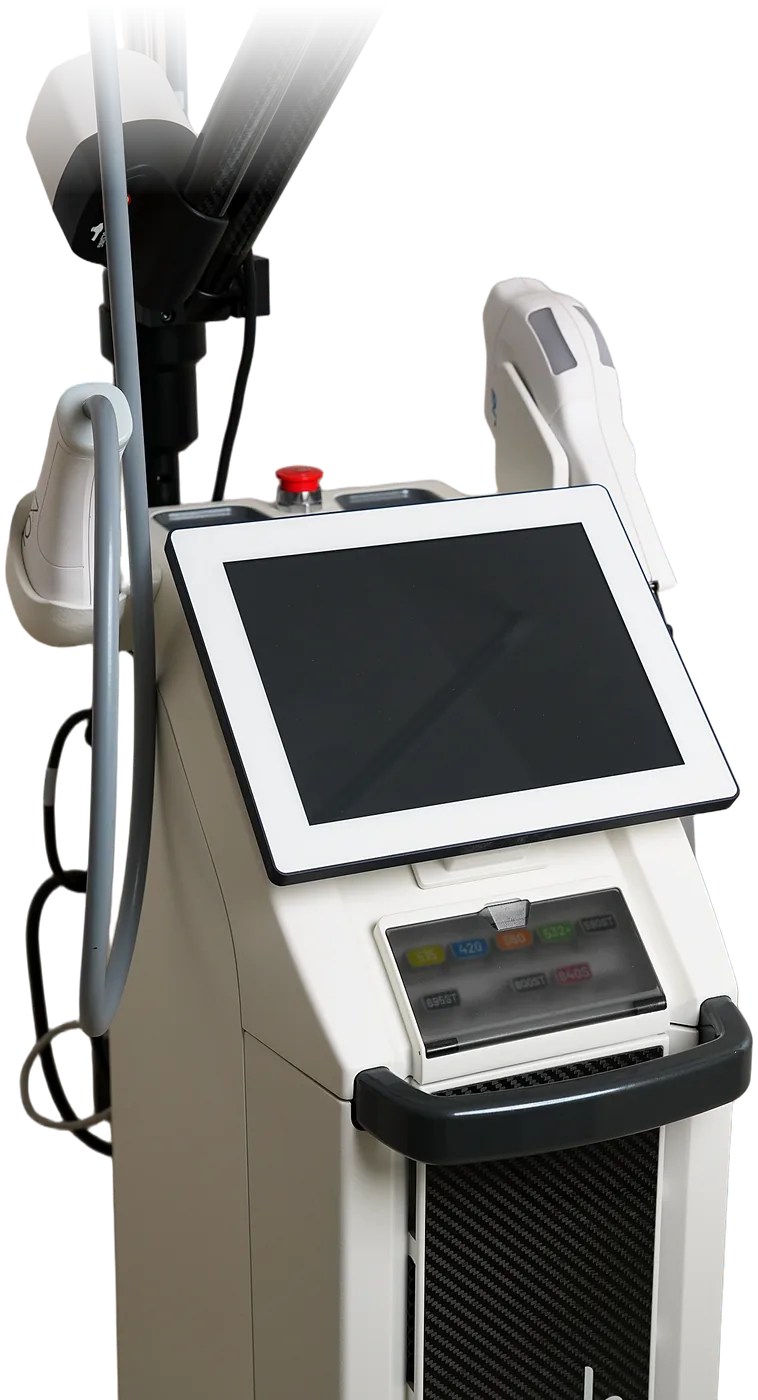
What MOXI is used for
Dullness, uneven tone, rough texture, the first sun spots and fine lines. The everyday signs that skin has lost a little of its clarity — before anything dramatic is needed.
Concerns it may help with
Related treatments
From the Journal
- Laser and light on darker skin tones: what suits, and how dark marks are avoided
- MOXI, BBL HEROic or Sylfirm X: laser, light or RF microneedling?
- Filler, anti-wrinkle injections, skin boosters or a device: which does what
- Enlarged pores: why they show, and what can make them look smaller
- Neck lines, a looser neck and the décolletage: what can help
- Acne marks or acne scars? Telling them apart, and what treats each
- Melasma in a sunny climate: sunscreen, heat and treatment in Dubai
- Summer skin care in Dubai: a routine for heat, humidity and air-conditioning
- Planning treatments around a flight: before you fly, and after you land
- Before a wedding in Dubai: when to book each treatment
- Laser and the Dubai sun: when to start
How MOXI works
A gentle, non-ablative 1927 nm fractional laser. It works on the water in your skin cells rather than on pigment, which is why it suits all skin tones, darker ones included. It refreshes the surface and prompts the skin to renew itself.
A session, step by step
- We start with your concern, a look at your skin, photographs in the same light each time, and a check of your health, the medicines you take and any recent sun or tan.
- The skin is cleansed. A numbing cream goes on first only for the stronger settings; the gentle ones usually don't need it.
- The laser itself takes around 8 to 20 minutes: the handpiece glides over the skin in several passes, and you feel a warm, prickly heat.
- A cool compress and a plain moisturiser to finish. Keep out of the sun on the way home; daily sunscreen starts the next morning.
What to expect
How it feels
Quick — most sessions are around 8–20 minutes. A warm, prickly heat, well tolerated; numbing cream only for the stronger settings. Often called the “lunchtime laser.”
Downtime and recovery
Minimal. Some redness, usually for a few hours, then a fine, bronzed, sandpaper-like texture appears around day 2–3 and naturally sheds by day 5–7. Most people return to normal the same day. Strict SPF afterwards.
How many sessions, and how often
A glow can show after a single treatment. For a real change in tone and texture, a course of 2–4 sessions, spaced a few weeks apart, then one or two a year to maintain.
Who it may not suit
We go through your health and medicines first, because MOXI may not suit you, or may need to wait, if any of these apply:
- You are pregnant or breastfeeding.
- There is an infection, a rash, dermatitis or broken skin in the area.
- You get cold sores, or have had shingles, in the area: treatment is still possible, with preventive antiviral medicine first.
- You have taken isotretinoin or steroid tablets in the last six months, or used a retinoid, steroid or hydroquinone cream on the area in the last month.
- You take a medicine that makes your skin more sensitive to light, or have had seizures set off by light.
- You tend to form keloid or raised scars, or heal poorly.
- You tend to get darker or lighter patches after a skin injury, or have melasma: we go carefully.
- You have vitiligo, eczema or psoriasis, a connective tissue disease such as lupus or scleroderma, or a weakened immune system.
- You have poorly controlled diabetes or blood pressure, a bleeding disorder, or take blood thinners.
- You have had radiotherapy to the area, are having chemotherapy, or have ever been treated with gold salts for arthritis or lupus.
- The area has a tan or a recent sunburn, or will be in strong sun in the weeks around treatment.
- There is, or has been, a skin cancer in the area, or there is a large mole.
Risks and side effects of MOXI
Common and short-lived: warmth for a few hours, sometimes into the next day; redness, usually gone within hours after gentle settings but lasting up to a week after stronger ones; and swelling, most noticeable under the eyes the first morning, usually for two to four days. From day two or three, tiny dark dots and a bronzed, sandpaper-like dryness appear, then flake away as new skin forms.
Less common: itching while the skin flakes, a cold-sore flare in people who get them, and infection, which needs prompt treatment.
Uncommon, but important to know: darker patches after inflammation, more likely on deeper or tanned skin and with sun exposure, and rarely blistering or scarring. Careful settings, not picking or scratching, and strict sun protection lower these risks.
Results need upkeep. In a study of MOXI, spots were measurably fewer a month after two sessions, but pigment had drifted back towards its starting point by three months, over a summer; the authors suggest repeat treatments to maintain results.
Aftercare
- For a month after each session, wear a wide-brimmed hat or covering clothes outdoors and keep to the shade: in Dubai, plan around the midday sun.
- Daily mineral sunscreen, SPF 30 or higher, from the morning after, reapplied through the day, for the next three months.
- Wash twice a day with lukewarm water and a gentle cleanser, patting rather than rubbing, and moisturise generously. Let the dark dots and flakes shed on their own, with no scrubs, brushes, acids or retinoids until the skin settles: picking or scratching can scar or mark it.
- For the first 24 hours: no make-up, hard exercise, sauna or steam, and as little sweating as Dubai's heat allows.
- If swelling bothers you, use a cool compress, and sleep a little propped up for the first two or three nights.
- Message us straight away if you notice pus, warmth that spreads or grows, a fever or severe itching.
How pricing works
We don't publish prices. The cost depends on the area, from the face alone to the neck, chest or hands, and on the number of sessions your skin needs, which we decide together at the consultation. You know the full plan and its cost before you start, and we suggest only the sessions your concern calls for.
Our take
MOXI is a gentle, entry-level resurfacer — the right tool for early signs, glow, and upkeep, not for deep concerns.
For pigmentation like melasma, or for deeper skin tones, we go carefully and only on the physician's judgment, because thermal lasers can occasionally provoke pigment. We'll recommend the shortest course that does the job — and if your skin isn't ready, we'll say so.
Questions people ask
Which skin types can have MOXI, and is it suitable for darker skin?
Usually all of them, after assessment. MOXI's light is absorbed by water rather than pigment, and its maker says it can treat all skin types; a review of devices in skin of colour describes non-ablative fractional lasers in use across skin types III to VI. Heat can still trigger pigment, so on deeper skin tones we start gently, on the physician's judgment.
Who is MOXI for, and what age is it for?
Age matters less than where your concern sits. MOXI suits a concern at the surface: dullness, uneven tone, rough texture, the first sun spots and fine lines, whether you are starting early or keeping your skin even. Its maker describes it for people just beginning their skin care and for anyone wanting a light resurfacing option at any time of year, on all skin types. It suits less when the concern sits deeper: sagging skin, pitted scars or stubborn melasma usually call for another treatment. It waits during pregnancy and breastfeeding, and while the skin has a tan or a recent sunburn.
Can I have MOXI in the Dubai summer?
Yes, if you can keep the treated skin out of the sun. Its maker describes MOXI as an option for any time of year, but the aftercare asks for a month of hats or covering clothes and three months of daily sunscreen, and summer sun can wear the result down sooner.
How long before an event should I have MOXI?
Leave at least a week, ideally two before Eid, a wedding or photographs. The bronzed, sandpaper-like phase usually sheds by day five to seven, and redness after stronger settings can last up to a week.
When can I wear make-up and go back to work after MOXI?
Make-up can usually go back on 24 hours after the session, as the maker's aftercare says; until then, skip make-up, hard exercise, sauna and steam. Most people go back to work the same day. Redness usually lasts a few hours, or up to a week after stronger settings, and swelling can show under the eyes the first morning. From about day two or three the skin looks bronzed and feels like fine sandpaper until it sheds, usually by day five to seven, so plan photographs for after that.
How do I prepare for MOXI, and who should wait?
At the consultation, tell us the medicines you take, any recent sun or tan, and whether you get cold sores, melasma or raised scars. In the weeks before, keep the area out of strong sun and don't tan: a tan, a recent sunburn, pregnancy or breastfeeding means we wait. So does a retinoid, steroid or hydroquinone cream on the area in the last month, or isotretinoin or steroid tablets in the last six months; never stop a prescribed medicine without asking the doctor who prescribed it. If you get cold sores, preventive antiviral medicine comes first. On the day, come with clean skin; numbing cream goes on only for the stronger settings.
Does the MOXI fractional laser help pigmentation and melasma?
For sun-related pigment, it can: in a study of MOXI on sun-damaged skin, brown spots were measurably fewer a month after two sessions. Melasma is different: sometimes it helps, with care, but results with non-ablative lasers have been less consistent, melasma often returns, and heat can provoke it. We decide on the physician's judgment and start gently; for stubborn melasma, Sylfirm X may suit your skin better.
How is MOXI different from BBL HEROic?
MOXI is a laser that refreshes the surface for tone, texture and the first sun spots, with a few days of bronzed, flaking skin. BBL HEROic is pulsed light that targets visible spots and redness, usually with little to no downtime. Some plans use both; we choose on your skin.
BBL and the MOXI laser together: can they be combined, what are the benefits, and how many sessions?
Yes, when your skin has both visible spots or redness and dull, rough texture. The two do different jobs: BBL HEROic's pulsed light targets spots and redness, and MOXI's laser renews the surface, so a plan can use each for its own part. Sciton, which makes both, describes MOXI combined with BBL HEROic for the visible signs of sun and time on the skin, and registered a small pilot study of its 1927 nm laser alone or with broadband light (15 people; no results posted). On their own, MOXI usually takes two to four sessions and BBL HEROic three to five; together, the doctor sets the number, the order and the spacing after looking at your skin. On deeper skin tones, pulsed light carries more risk of blistering and pigment change, so the plan may be MOXI alone.
Where can I get MOXI fractional laser skin resurfacing in Dubai, and how do I choose a clinic?
We offer MOXI at CREAMÉ, our villa at 350 Al Wasl Road, Jumeirah 1, open every day from 9:00 to 21:00. Dr. Katerina Nikolaevskaya, a doctor trained in dermatovenereology who has worked in laser and device-based cosmetology since 2001, has BBL HEROic and MOXI as her main focus here; Dr. Olga Ibrakova's work also includes MOXI, and Dr. Svetlana Tagaeva, the Medical Director, leads the clinic's medical work, energy-based treatments included. Wherever you go, look for a doctor licensed by the Dubai Health Authority who examines your skin and its tone before choosing settings, asks about melasma, your medicines and recent sun, and tells you when another treatment would suit you better.
How much does MOXI fractional laser resurfacing cost per session in Dubai, for the face and other areas?
We don't publish prices. The cost of a session depends on the area, from the face alone to the neck, chest or hands, and the total depends on how many sessions your skin needs, usually two to four for a real change in tone and texture, and on whether your plan also includes another treatment, such as BBL HEROic. We decide it together at the consultation, and you know the full plan and its cost before you start.
MOXI fractional laser resurfacing vs BBL or IPL on the face: how do the side effects differ?
Redness usually settles within hours after both, or within a week after stronger MOXI settings. After MOXI, swelling can show under the eyes, then a bronzed, sandpaper-like texture usually sheds by day seven. BBL HEROic, our broadband light, is a form of intense pulsed light (IPL): treated spots darken, then flake away over 5 to 10 days, and it can reduce hair growth. Pulsed light carries more risk of blistering and pigment change on deeper skin; MOXI, whose light is absorbed by water, usually suits it after assessment.
What are the benefits of a MOXI laser facial, and can fractional laser resurfacing be used beyond the face, on the neck, chest, hands or body?
It can brighten dull skin, even out tone, smooth rough texture and soften the first sun spots and fine lines; a glow can show after one session, and a real change usually takes two to four. Its maker lists the neck, chest, hands, arms and legs as well as the face. We use it on the neck, chest and hands as well as the face, though results off the face tend to be more modest: a review of this kind of laser notes that facial skin responds better.
MOXI laser resurfacing: how does it work, is it ablative, and is it worth it?
It is non-ablative: its 1927 nm light heats tiny columns of skin through the water in their cells, to a depth its maker gives as 100 to 200 micrometres (a tenth to a fifth of a millimetre), without removing the surface, and leaves the skin between them untouched; the treated dots surface as the bronzed flakes and are replaced by new skin. Whether it is worth it depends on your concern. For sun-related pigment, a study of 27 women found that two sessions a month apart measurably reduced spots a month later. It will not lift sagging skin, reach pitted scars or reliably clear melasma; if another treatment suits you better, we'll say so.
MOXI fractional laser resurfacing before and after: what changes after one session, and after a course?
We don't show photographs of results; at each visit we photograph your own skin in the same light, so you can compare. In the first week: redness, sometimes swelling, then tiny dark dots and a bronzed, sandpaper-like texture that sheds by about day five to seven. After that, skin can look fresher, and a glow can show after one session; tone and texture build over a course of two to four. In a study of MOXI on sun-damaged skin, brown spots were measurably fewer a month after two sessions, and some pigment returned over the following summer, which is why sun protection and upkeep matter.
MOXI fractional laser resurfacing: recovery time and downtime day by day, and when will I see results?
Most people return to normal the same day, though recovery varies with the settings. On the day, expect warmth and redness, usually for a few hours, up to a week after stronger settings. Swelling is often most noticeable under the eyes the next morning and usually eases in two to four days. Around day two or three, tiny dark dots and a bronzed, sandpaper-like dryness appear, then shed, usually by day five to seven. A fresher look can show once that has cleared; tone and texture build over the course.
What aftercare do I need after MOXI fractional laser, day by day?
For the first 24 hours, skip make-up, hard exercise, sauna and steam; a cool compress can ease swelling. From the next morning, wash twice a day with lukewarm water and a gentle cleanser, moisturise generously, and apply mineral SPF 30 or higher daily for three months. While the flakes shed, around days two to seven, don't pick or scrub, and leave acids and retinoids until the skin settles. For a month, wear a hat and keep to the shade. Message us if you notice pus, spreading warmth or a fever.
What are the side effects and risks of MOXI fractional laser resurfacing?
Most are part of healing and pass within days: warmth, redness, swelling that is often most noticeable under the eyes the first morning, then dark dots and flaking. Some people get itching, tiny white bumps (milia), or a breakout if their skin is prone to acne; less often, a cold-sore flare or infection. Uncommon but important: darker patches, more likely on deeper or tanned skin, and rarely blistering or scarring.
How many MOXI fractional laser resurfacing sessions will I need, and how long do results last?
On its own, usually two to four sessions a few weeks apart, then one or two a year to maintain. Results need upkeep, because sun can bring pigment back: in a study of MOXI, brown spots were still lighter three months after two sessions, though some pigment had returned over the summer.
MOXI fractional laser resurfacing vs RF microneedling with Sylfirm X: which suits my skin and acne scars?
It depends on how deep your concern sits. MOXI is a gentle laser that renews the surface for dullness, uneven tone, rough texture and the first sun spots, with a few days of bronzed, flaking skin. Sylfirm X is radiofrequency microneedling that works beneath the surface, so we usually reach for it for melasma, persistent redness, acne scarring and early laxity; it starts with numbing cream and usually leaves a day or two of pinkness. Some plans combine the two; we decide after looking at your skin.
Does MOXI laser resurfacing hurt, and how is pain managed?
It usually feels like a warm, prickly heat, and most sessions are well tolerated. The handpiece glides over the skin in several passes, for around 8 to 20 minutes. Numbing cream goes on first only for the stronger settings; the gentle ones usually don't need it. Afterwards the skin can feel warm for a few hours, sometimes into the next day, and a cool compress helps.
Is MOXI laser resurfacing good for acne scars, active acne, rosacea or wrinkles?
Partly: it can soften fine lines and shallow acne-scar texture, but we don't use it for active acne or rosacea. In acne-prone skin it can bring on a breakout, so for breakouts we start with LED light and a deep cleanse. It does not reach pitted scars, where Sylfirm X is usually the choice. For redness and rosacea, we look at BBL HEROic, LED light or Sylfirm X. Lines that appear when you move usually respond to anti-wrinkle injections instead.
Can MOXI fractional laser resurfacing treat under the eyes, dark circles or eye bags?
Only at the surface. MOXI renews the skin's surface layer, so under the eyes it can reach only fine texture and tone, and after a face session swelling is often most noticeable there the first morning, for two to four days. Most under-eye concerns sit deeper: eye bags come from fat or fluid beneath the skin, which a surface laser doesn't reach; a true hollow is lost support, for filler; fine lines and crepey skin there usually respond better to Volnewmer radiofrequency or skin boosters; and dark circles can be pigment, visible vessels or the shadow of a hollow, so the doctor finds the cause first.
Sources
- Vingan NR, Panton JA, Barillas J, et al. Investigating the efficacy of a fractionated 1927 nm laser for diffuse dyspigmentation and actinic changes. Lasers Surg Med. 2023;55(4):344–358.
- Sciton. MOXI patient post-care instructions (2600-028-03 Rev. A). 2020.
- Sciton. MOXI by Sciton: treatment information and questions.
- Pilot evaluation of thulium laser alone or in combination with broad band light for treatment of dermatologic conditions (Sciton protocol S-18-TB01). ClinicalTrials.gov NCT03944278.
- Husain Z, Alster TS. The role of lasers and intense pulsed light technology in dermatology. Clin Cosmet Investig Dermatol. 2016;9:29–40.
- Sanyal RD, Fabi SG. Energy-based devices for the treatment of facial skin conditions in skin of color. J Clin Aesthet Dermatol. 2024;17(6):22–32.
Updated 30 October 2026