Cryotherapy Whole-body cryotherapy chamber
Whole-body cryotherapy: two to three minutes of deep, dry cold at −80 to −90°C in a fully electric chamber, with no nitrogen. Bracing and brief, after a check of your health.
Key facts
- Where
- CREAMÉ, 350 Al Wasl Road, Jumeirah 1, Dubai
- Session
- 2–3 minutes in the cold, about 15 in all
- Downtime
- Usually none
- Course
- A first block of 5–10 sessions
- Device
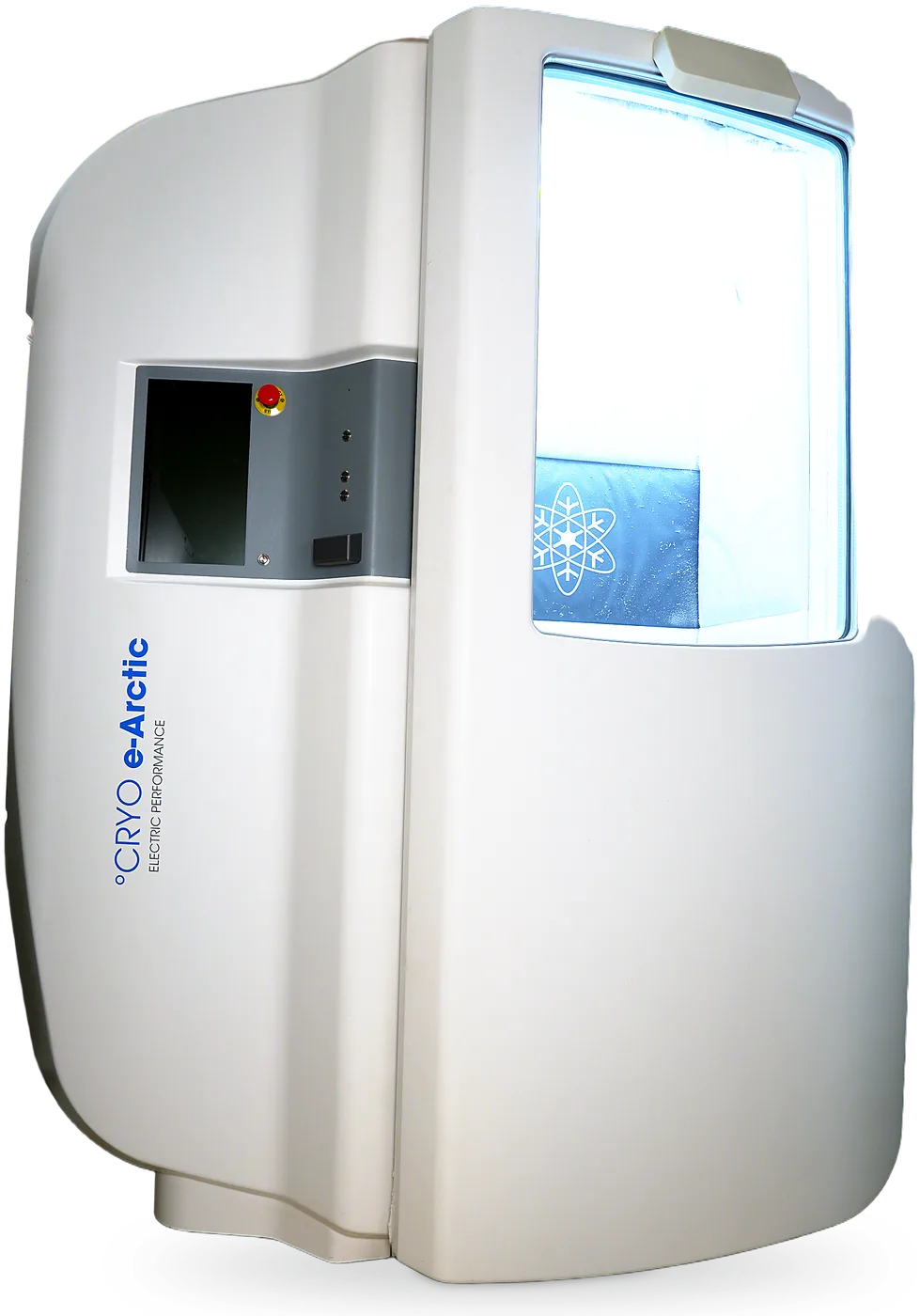
- e-Arctic by Cryo Science, Poland Electric whole-body cold chamber, −80 to −90°C, no nitrogen
e‑Arctic by Cryo Science, Poland
Electric whole-body cold chamber, −80 to −90°C, no nitrogen
What whole-body cryotherapy is used for
Sore muscles and slow recovery, training load, low energy, restless sleep, the fog after long-haul travel. A body that needs a reset more than a treatment.
Concerns it may help with
Related treatments
How whole-body cryotherapy works
A single-person, fully electric cold chamber — no nitrogen gas — that chills ordinary breathable air to −80 to −90°C. The whole body is exposed, head included, for two to three minutes. The cold triggers a sharp constriction of blood vessels followed by a rush of rewarming, endorphins and norepinephrine when you step out.
The benefits of cold: what whole-body cryotherapy may do, and how strong the evidence is
What it offers for certain is the experience: two to three minutes of intense, dry cold that most people find bracing, after which many feel clear-headed. Beyond that, here is each benefit people ask about, with how strong the evidence is.
Feeling less sore after hard exercise: some evidence, but weak. A 2014 review found that small trials reported less soreness and a better sense of recovery after whole-body cryotherapy; a Cochrane review found too little good research to be sure, and the trials were mostly in young, active men.
Faster recovery of the muscles themselves: not shown. The same 2014 review found no effect on blood markers of muscle damage and little benefit to strength or performance afterwards. Changes in markers of inflammation have been measured in athletes, but the authors call that evidence preliminary.
Sleep, energy and mood: not established. They are among the most common reasons people come, but the research we rely on doesn't show them, so we can't promise them.
Weight, body shape and skin: not shown. A 2022 review found only eight studies of whole-body cold in people with obesity and no firm conclusion, and we don't offer cryotherapy as a weight, body-shape or skin treatment.
Electric or nitrogen: how a whole-body cryotherapy chamber works
Two kinds of machine share the name, and it's worth knowing which is which. A whole-body cryotherapy chamber cools the air itself, without nitrogen: your whole body, head included, is in very cold, dry air that you breathe normally. In the research, chambers run anywhere from −50 to −150°C. Ours, the e-Arctic, chills ordinary air electrically to −80 to −90°C, and a session lasts two to three minutes.
A partial-body cabin, which researchers call a cryosauna, works differently: it is cooled with a mist of liquid nitrogen at about −190°C, and your head stays outside, above the cold.
So the two differ in how the cold is made, in whether your head is in it and in how cold it gets. Studies of one don't always tell you about the other, which is why the reviews we cite keep them apart.
Whole-body cryotherapy chamber vs an ice bath or cold-water immersion
Both cool you, in different ways. An ice bath, or cold-water immersion, surrounds you with cold water; a cryotherapy chamber uses much colder air, which draws heat from the body more slowly than water does, and leaves you dry.
In a study of 20 active men, four minutes in a chamber at −110°C and four minutes in water at 8°C lowered muscle and core temperature by similar, small amounts, measured an hour later; the chamber cooled the skin more. A 2014 review concluded that whole-body cryotherapy cools the body's tissues about as much as traditional cold treatments, or less. Our chamber runs warmer, at −80 to −90°C, for two to three minutes, so those figures don't carry over exactly.
In practice, the chamber means two to three minutes, dry, with your hands, feet and ears covered; an ice bath means getting wet. For whole-body cryotherapy, the Cochrane review found too little good research to say whether it eases soreness after exercise, so choose the one you find easier to keep up, and judge it by how you feel.
Who whole-body cryotherapy suits, and who should not have it
It suits healthy adults who want a short, bracing burst of cold for comfort: after hard training, a long-haul flight or a heavy week. It is for how it makes you feel, not to treat a condition, change your weight or treat your skin.
It isn't for you, or should wait, if you are pregnant or breastfeeding; have a heart condition, a pacemaker, or high blood pressure that isn't well controlled; have a circulation problem, Raynaud's or an allergy to cold; have a fever or an infection that day; have severe claustrophobia; or have been drinking. The full list is below, and we go through your health, your medicines and your blood pressure before your first session.
What to wear for whole-body cryotherapy, and what the first session feels like
Wear minimal clothing that is completely dry, with nothing still damp from training, the pool or the heat outside: damp skin or clothing is behind the few cold burns reported. We give you gloves, socks and ear protection, and jewellery, piercings and glasses come off. Skip body lotion, oil and self-tan that day if you can: a safety review lists them among possible triggers of hives.
The cold is intense but dry, and most people are surprised how tolerable it is. Your skin may look pink and tingle for a few minutes as it warms, and many people feel clear-headed afterwards. There is no minimum time: we stay right outside, and you can step out whenever you want.
Before your first session we ask about your health, the medicines you take and your blood pressure, and each time you come, how you feel that day. The whole visit takes about fifteen minutes.
A session, step by step
- We start with your health, the medicines you take and your blood pressure, and ask how you feel each time you come.
- If you've come in from the heat or from training, you cool down and dry off first: your skin must be completely dry.
- You change into minimal, dry clothing and put on the gloves, socks and ear protection we provide. Jewellery, piercings and glasses come off.
- You step into the chamber for two to three minutes. We stay right outside the whole time, and you can step out whenever you want.
- Afterwards, a few minutes of light movement while your skin warms and its colour returns, then water. The whole visit takes about fifteen minutes.
What to expect
How it feels
The session itself is 2–3 minutes; the whole visit around fifteen. An intense, dry, bracing cold — most people are surprised how tolerable it is, and how clear their head feels after. Gloves, socks and ear protection are provided; skin must be completely dry.
Downtime and recovery
Usually none — most people leave feeling energised. The skin can look pink and tingle for a few minutes. A few minutes of light movement afterwards restores circulation, then rehydrate.
How many sessions, and how often
For recovery, athletes use it daily around heavy training; for general wellbeing, one to three sessions a week. A first block of 5–10 sessions is the honest way to find out what it does for you.
Who it may not suit
We go through your health and medicines first, because whole-body cryotherapy may not suit you, or may need to wait, if any of these apply:
- You are pregnant or breastfeeding.
- You have a heart condition, such as coronary heart disease, heart failure, a narrowed heart valve or an irregular heartbeat, or you have a pacemaker or an implanted defibrillator.
- Your blood pressure is high and not well controlled.
- You have had a blood clot in a vein or the lungs, or a stroke in the past year, or you have a circulation problem such as peripheral artery disease or vasculitis.
- You have Raynaud's, cold urticaria (hives brought on by cold) or another cold allergy, or a condition made worse by cold, such as cryoglobulinaemia.
- You have a fever or an infection, including a cold or a chest infection, or you feel unwell, dizzy or shivery that day.
- You have severe asthma or another serious lung condition, epilepsy or chronic migraine.
- You have type 1 diabetes, type 2 diabetes that is not well controlled, or a thyroid condition that is not under control.
- You have cancer or are being treated for it, or you have ever had melanoma or another aggressive skin cancer.
- You have glaucoma, serious kidney disease or severe anaemia.
- You have open wounds, ulcers or a skin infection.
- You have severe claustrophobia.
- You have been drinking alcohol or have taken recreational drugs.
- You are over 80.
Risks and side effects of whole-body cryotherapy
Common and short-lived: pink, tingling skin for a few minutes afterwards, which settles as you warm up.
Less common: a headache, dizziness or feeling unwell, shivering that lasts a while, a short rise in blood pressure, or itchy hives.
Rare: cold burns to the skin. The few reported cases were put down to slips in preparation, such as going in with wet skin or damp clothing, which is why your skin must be completely dry and your hands, feet and ears are covered.
Very rare: a handful of case reports describe serious events after a session, including a bleed in the brain and a tear in the aorta. The safety reviews call for medical screening first, which is why we ask about your health and blood pressure before you go in.
Aftercare
- Move gently for a few minutes afterwards while your skin warms and its colour returns.
- Drink water afterwards, and keep drinking through the day in the Dubai heat.
- Before your next session, tell us if anything about your health or medicines has changed, or if you feel unwell that day.
- Message us straight away if a patch of skin stays sore or changes colour, or if you feel unwell after a session.
How pricing works
We don't publish prices. Cryotherapy is planned as a first block of sessions, then a rhythm that suits you, and the cost depends on how many sessions you have and how often. You know the cost before you start, and if a first block does little for you, we'll say so rather than suggest more.
Our take
Cryotherapy is a wellness tool, not a medical treatment — and we'll say that plainly rather than dress it up.
The research on its measurable effects is genuinely mixed, and no cold chamber treats a medical condition. What it offers for certain is the experience itself: two minutes of intense, dry cold, bracing and brief. Recovery, sleep and mood are often why people come, though the evidence can't promise them. If that's what you're after, it earns its place; if you're after something it can't do, we'll tell you.
Questions people ask
Is whole-body cryotherapy the same as cryosurgery, which freezes warts or skin spots?
No. That is a local treatment that freezes a small patch of skin. Whole-body cryotherapy is two to three minutes in very cold, dry air, and we offer it for comfort and recovery, not to treat any condition.
Does a cryotherapy chamber help muscle recovery?
The evidence is thin. A Cochrane review found too little good research to say whether it eases muscle soreness or helps people feel recovered after exercise; the trials were small and mostly in young men. Another review found some evidence that people feel less sore, without a clear gain in how the muscles actually recover. We offer it for how it makes you feel, and a first block of sessions is the honest way to find out.
Is a cryosauna the same as a whole-body cryotherapy chamber, and is yours electric?
Not quite, though the two names are often mixed up. In the research, a cryosauna is a cabin cooled with liquid-nitrogen mist, with your head outside it. Our e-Arctic is a chamber that chills ordinary air electrically, so there is no nitrogen gas in it and you breathe normal air throughout. Your whole body, head included, is in the cold for two to three minutes.
I'm claustrophobic. Can I still try it?
Tell us first. The chamber is made for one person and your head is inside, so severe claustrophobia is a reason to skip it. If it's milder, we talk it through: we stay right outside the whole time, and you can step out whenever you want.
Can I come straight from the heat or the gym?
Give yourself time to cool down first. Damp skin raises the risk of a cold burn, so in Dubai's heat, or after training, we make sure your skin is completely dry before you go in.
Hot or cold: cryotherapy vs the heat of an infrared sauna like the Iyashi Dôme, and can I combine them?
They feel like opposites: two to three minutes of intense, dry cold that most people find bracing, or thirty minutes of building warmth that ends in a proper sweat. Both are for comfort and recovery rather than treatment, and the evidence for both is limited, so we suggest trying the one that appeals and judging it by how you feel. Some people like both, though there is little good research on combining them. If you'd like both on one day, tell us: after the dome you'd need to cool down, shower and dry off completely before the chamber, since damp skin raises the risk of a cold burn. Each has its own reasons to wait, so we check your health for both.
Where can I get whole-body cryotherapy at a clinic near Al Wasl Road in Jumeirah, and who does it?
At CREAMÉ, our villa at 350 Al Wasl Road, Jumeirah 1, in a fully electric e-Arctic chamber. We run every session: we ask about your health, your medicines and your blood pressure first, check how you feel each time you come, and stay right outside for the two to three minutes. Wherever you go, choose a place that checks your health before you go in, makes sure your skin is completely dry, covers your hands, feet and ears, and lets you step out whenever you want.
How much does the cryotherapy chamber cost per session in Dubai?
At CREAMÉ, 350 Al Wasl Road, Jumeirah 1, we don't publish prices: the cost depends on how many sessions you have and how often you come. Cryotherapy is usually planned as a first block of 5 to 10 sessions, then a rhythm that suits you, from one to three a week for general wellbeing to daily around heavy training. We set the plan with you before you start, so you know the full cost first, and if the first block does little for you, we'll say so rather than suggest more.
What are the benefits, risks and side effects of whole-body cold in a cryotherapy chamber?
Recovery, sleep and mood are common reasons to come, but the research is mixed and can't promise them; what it offers for certain is two to three minutes of intense, dry cold, after which many people feel clear-headed. Pink, tingling skin for a few minutes is common; less often a headache, dizziness, lasting shivering, a short rise in blood pressure or itchy hives. Cold burns are rare, and a handful of serious events, including a bleed in the brain, have been reported, which is why we check your health first.
How long does a session in the whole-body cryotherapy chamber last, and how often should I go?
Two to three minutes in the cold, and about fifteen minutes for the whole visit, with time to get ready beforehand and to move gently as you warm up afterwards. The pink, tingling skin usually settles within a few minutes. For general wellbeing, one to three sessions a week; athletes sometimes use it daily around heavy training. Start with a first block of 5 to 10 sessions, then keep to the rhythm that feels right for you.
What should I do before and after whole-body cryotherapy, and does my face need any aftercare?
Before: no alcohol, and if you've come from the heat or from training, cool down and dry off fully, since damp skin raises the risk of a cold burn. Skip body lotion, oil and self-tan that day if you can: a safety review lists them among possible triggers of hives. After: a few minutes of gentle movement, then water, and keep drinking through the day. Your face is in the cold too; its pinkness usually settles within minutes. Message us if a patch stays sore or changes colour.
Does whole-body cryotherapy hurt, and how cold is the chamber?
It is intense, and most people are surprised how tolerable it is. The air in the chamber is −80 to −90°C, but it is dry, and you are in it for only two to three minutes, with the gloves, socks and ear protection we provide covering your hands, feet and ears. Your skin may tingle as it warms afterwards. We stay right outside the whole time, and you can step out whenever you want.
Does a whole-body cryotherapy chamber have benefits for weight loss or fat loss, and how many sessions would it take?
We don't offer it for weight or fat loss, so there is no number of sessions we would plan for it, and we can't promise any change on the scales or in your shape. A 2022 review of whole-body cold in people with obesity found only eight studies and no firm conclusion, and called for larger, better ones. We offer cryotherapy for comfort and recovery; if your weight or shape is what concerns you, tell us, and we'll talk it through honestly.
Does whole-body cryotherapy benefit the skin and face, and can it cause side effects on the skin or eyes?
Not in a way we can promise: we offer it for comfort and recovery, not as a skin or facial treatment. Your head is inside, so your face meets the cold too: skin often looks pink and tingles for a few minutes, itchy hives are less common, and cold burns are rare, mostly from damp skin or clothing. Glasses come off, glaucoma is a reason to skip it, and we ask about any eye condition first. For skin concerns, our cosmetology treatments are the place to start.
Are the benefits of cryotherapy the same for women and men, and is it recommended during or after pregnancy?
We can't say for certain: the trials on recovery were small and mostly in young men, so less is known about women. We offer it to women and men for the same reasons, comfort and recovery. Pregnancy is different: an expert panel on whole-body cryotherapy lists it among the reasons to wait, and we don't offer it while you are pregnant or breastfeeding. After the birth, once you have stopped breastfeeding and any wound has healed, the usual check of your health applies.
Is whole-body cryotherapy good or bad for you, and is it worth it?
For most healthy adults it is usually well tolerated after a health check, but it isn't for everyone, and it treats no condition. People come for sore muscles after training, energy or sleep, though the evidence is thin. Whether it's worth it depends on what you're after: if you enjoy the cold and feel better for it, it earns its place, and a first block of five to ten sessions is the honest way to find out.
Whole-body cryotherapy for athletes: what are the recovery benefits after a workout, and how often should you go?
Athletes use it to feel less sore after hard training, but whether it speeds recovery is unproven: a Cochrane review found too little good research to say, from small trials mostly in young men. After a workout, cool down, dry off and change out of damp kit first, since damp skin raises the risk of a cold burn. Some athletes come daily around heavy training; for general wellbeing, one to three sessions a week, after a first block of five to ten to see what it does for you.
Whole-body cryotherapy results, before and after: what changes, and how long does it take to work?
We don't show photographs of results: whole-body cryotherapy changes how you feel rather than how you look. Some things are clear at once: the bracing cold, pink, tingling skin for a few minutes, and, for many people, a clear head. Whether it eases soreness after training or helps your sleep or energy is judged over a first block of five to ten sessions, and the research can't promise those changes. Don't expect a change on the scales, in your shape or in your skin.
Sources
- Capodaglio P, Alito A, Duguè BM, et al. Contraindications to whole-body cryostimulation (WBC). A position paper from the WBC Working Group of the International Institute of Refrigeration and the multidisciplinary expert panel. Front Rehabil Sci. 2025;6:1567402.
- Legrand FD, Dugué B, Costello J, et al. Evaluating safety risks of whole-body cryotherapy/cryostimulation (WBC): a scoping review from an international consortium. Eur J Med Res. 2023;28(1):387.
- Bleakley CM, Bieuzen F, Davison GW, Costello JT. Whole-body cryotherapy: empirical evidence and theoretical perspectives. Open Access J Sports Med. 2014;5:25–36.
- Costello JT, Baker PR, Minett GM, et al. Whole-body cryotherapy (extreme cold air exposure) for preventing and treating muscle soreness after exercise in adults. Cochrane Database Syst Rev. 2015;(9):CD010789.
- Costello JT, Culligan K, Selfe J, Donnelly AE. Muscle, skin and core temperature after −110°C cold air and 8°C water treatment. PLoS One. 2012;7(11):e48190.
- Whole-body cryotherapy as a non-pharmacological treatment to reduce chronic pelvic pain and improve quality of life in people with endometriosis. ClinicalTrials.gov NCT07603960.
- Fontana JM, Bozgeyik S, Gobbi M, et al. Whole-body cryostimulation in obesity. A scoping review. J Therm Biol. 2022;106:103250.
Updated 30 October 2026